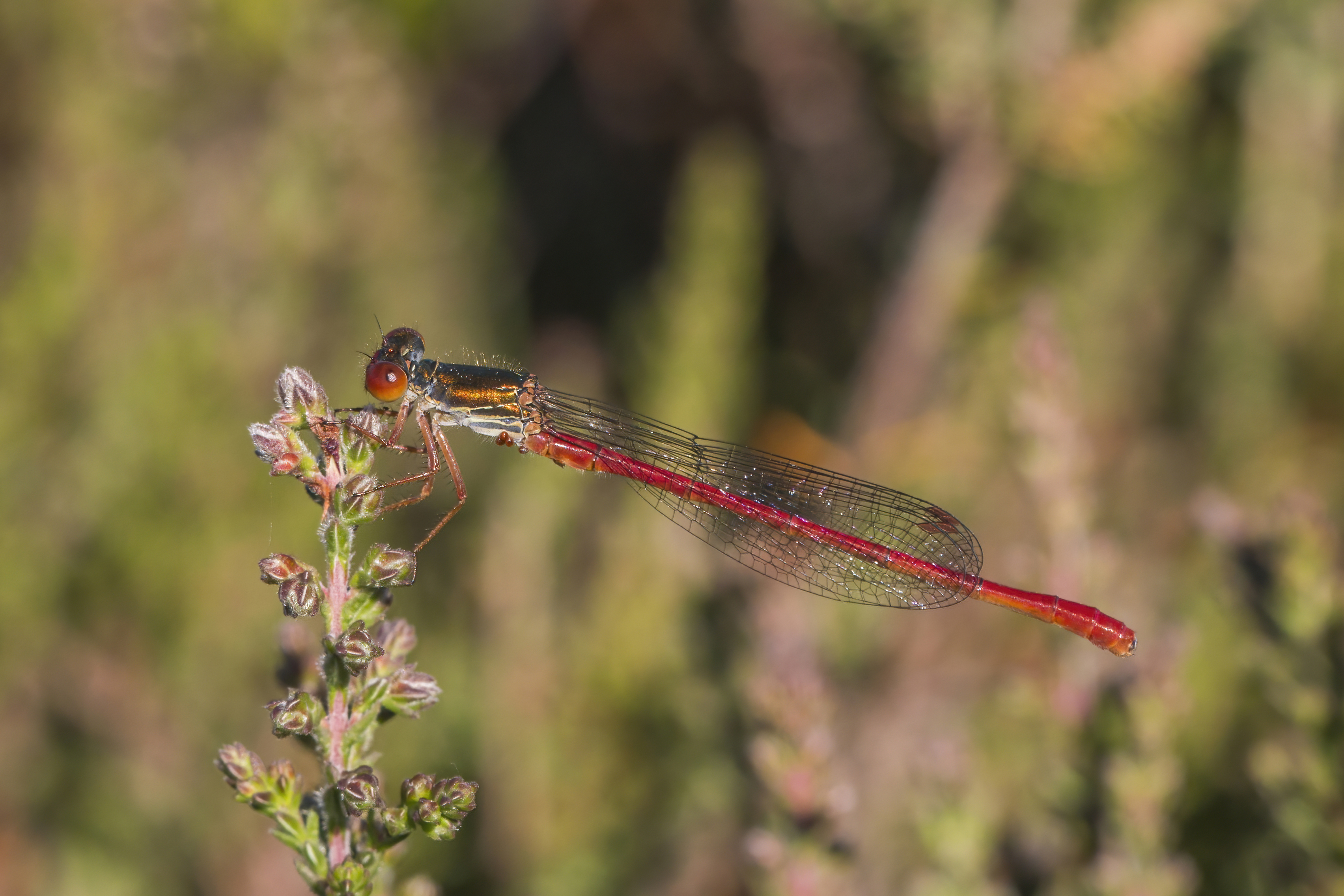
As the first dark, heavy clouds of the monsoon gather over the Sahyadri mountains, the silent mountain streams begin to stir. Hovering just inches above the roaring, crystal-clear rapids, a flash of metallic green and vivid orange catches the light. It is a damselfly, its delicate, double-winged body balancing effortlessly against the heavy spray of the rushing water.
These insects—belonging to the order *Odonata*, which includes both dragonflies and damselflies—are among the oldest winged creatures on the planet, having taken to the air long before the evolution of birds. In the Western Ghats, which hosts over 200 species of odonates, these hyper-sensitive insects are far more than just beautiful ornaments of the monsoon. They are first-class, biological indicators of stream health.
"A stream that runs clear, pure, and cold will announce its health not through digital sensors, but through the shimmering dance of its torrent dragonflies."
The Subterranean Nymphs: Sentinel Guardians
To understand why dragonflies are such excellent ecological indicators, one must look below the surface. While we only see the adult flying insects for a few fleeting weeks in the monsoon, dragonflies spend up to ninety percent of their long lives underwater as flightless, predatory larvae known as nymphs.
These aquatic nymphs are hyper-sensitive to their water chemistry. Unlike terrestrial insects, they cannot tolerate changes in water acidity, dissolved oxygen levels, pesticide runoff, or thermal pollution:
The Life of an Aquatic Predator
Dragonfly nymphs are formidable underwater predators. Living in stream beds, they possess a unique, mask-like hinged lower jaw that they shoot forward in milliseconds to capture mosquito larvae, small tadpoles, and even tiny fish, acting as natural pest-control engines.
The Science of Bio-Indicators
Because different odonate species have highly specific tolerances, biological surveys do not need expensive laboratory equipment to assess stream health. Instead, scientists and community citizen science networks map the presence of key "indicator species."
For instance, the **Malabar Torrent Dart** (*Euphaea fraseri*)—a damselfly endemic to the Western Ghats with deep red and copper-colored wings—only breeds in fast-flowing, highly oxygenated mountain torrents that are completely free of organic silt and agricultural chemicals. If a stream is polluted by pesticide runoff from nearby tea estates, or if upstream logging silts the rapid beds, the Torrent Dart will vanish immediately.
Conversely, the sudden appearance of hardy, generalist species like the **Common Picturewing** (*Rhyothemis variegata*) in place of stream specialists indicates that the water has become slow, stagnant, warm, and heavily degraded.
| Odonate Species | Preferred Habitat Type | Ecological Water Quality Indication |
|---|---|---|
| Malabar Torrent Dart (Endemic) | Fast-flowing, cold mountain streams with rocks | Pristine; zero pesticide runoff; high oxygen |
| Stream Ruby (Endemic) | Shaded forest brooks under dense canopy | Healthy riparian forest buffer; cool micro-climate |
| Granite Ghost | Mossy mountain stream margins | Stable year-round streamflow; healthy moss beds |
| Common Picturewing | Slow-moving, open marshlands; ponds | Warm, standing water; minor agricultural disturbance |
| Ditch Jewel | Stagnant pools, polluted water drains | Severe degradation; heavy organic pollution; low oxygen |
Citizen Science: Mapping the Sahyadri Headwaters
In recent years, the delicate nature of these insects has birthed a massive, community-driven citizen science movement. Because dragonflies are visually striking and relatively easy to photograph, groups of students, nature enthusiasts, and forest-edge farmers have formed mapping networks across Kerala and Karnataka.
Armed with mobile phones and basic field guides, these volunteer networks document and upload sightings of torrent-loving damselflies to open public databases. By overlaying these citizen-led sightings onto regional maps, conservation hydrologists can track the health of hundreds of remote, high-altitude headwater springs in real time.
When a volunteer reports the sudden disappearance of the Malabar Torrent Dart from a stream segment, it serves as an early-warning alarm, allowing forest teams to investigate upstream plantation pesticide use or illegal mud dumping before the entire river system is poisoned.
A Future Reflected in Shimmering Wings
The story of the Western Ghats' stream indicators is a powerful reminder that the grandest conservation stories are often told by the smallest actors. In the shimmering, metallic wings of a single torrent damselfly lies a detailed, unbroken record of the forest's hydrological health.
By protecting the high-altitude forests that feed these cold mountain torrents, and actively tracking the tiny, multi-colored sentinels that dance above their waves, we can ensure that the rivers of the Sahyadris continue to run pure, cold, and alive from the peaks to the plains.