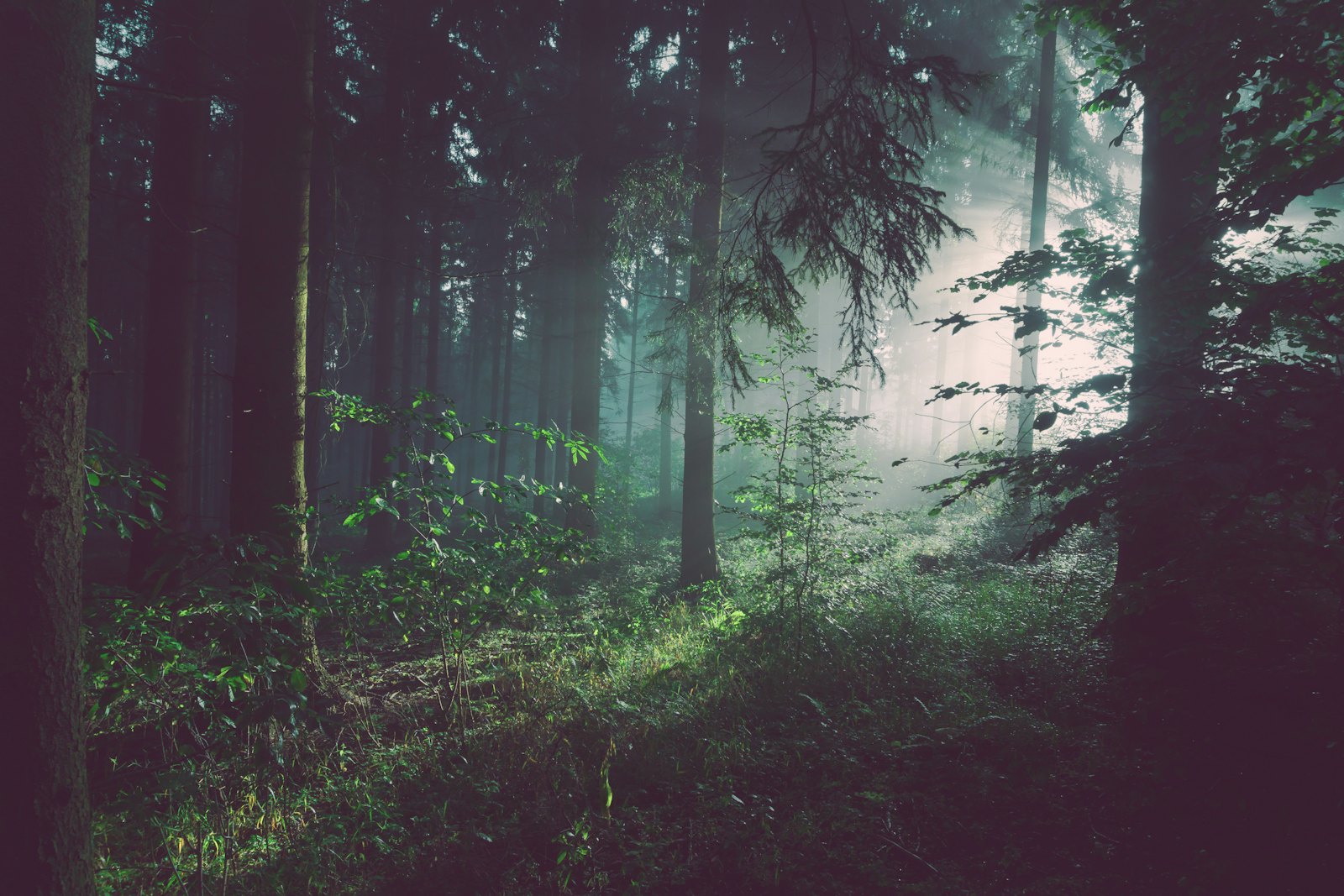
Every year, when the southwest monsoon arrives in the Sahyadri (Western Ghats) mountain ranges, it brings both life-giving rain and severe geological danger. In deforested high-altitude valleys, where native trees and montane grasses have been systematically cleared for roads, resorts, and cash crops, the relentless monsoonal downpours hit highly exposed, steep clay slopes.
Within hours, waterlogged clay soils become heavily liquefied. Under the immense pressure of gravity, entire hillsides give way, triggering catastrophic landslides and mudslides that sweep down the valleys, burying roads, wiping out homes, and permanently scarring fragile montane river ecosystems.
To prevent these tragedies, traditional civil engineering relies heavily on massive concrete retaining walls. But these hard, steel-and-stone structures are not only exceptionally expensive and visually jarring in a biological hotspot; they often exacerbate the problem by blocking natural mountain spring channels, leading to a build-up of hydraulic pressure behind the wall that eventually triggers spectacular structural collapses.
Instead, a pioneering ecological approach called **soil bio-engineering** is showing that the most resilient shield against the collapsing mountains is not concrete, but native vegetation—spearheaded by the humble, deep-rooted **Vetiver grass**.
"Concrete walls break under the weight of the mountain. The grass bends, holds the soil, and heals the slope from within."
The Science: Natural Underground Rebar
How can a simple bunchgrass succeed where massive steel-reinforced concrete walls fail? The answer lies in the extraordinary evolutionary biology of **Vetiver** (*Chrysopogon zizanioides*) and native montane riparian grasses.
Most common grasses develop a highly shallow, horizontal root network that expands only a few inches below the surface, doing little to anchor deeper soil columns. In contrast, Vetiver grows a massive, incredibly dense, sponge-like root system that shoots straight downwards, growing up to **three to four meters** deep within its first twelve months.
These vertical roots act like living **underground steel reinforcement bars (rebar)**. They pierce through the loose topsoil, anchor the fragile clay layers, and bind the entire soil profile directly to the stable bedrock beneath. With a tensile strength equivalent to nearly one-sixth of mild steel, these dense root clusters make it practically impossible for waterlogged soil columns to slip down the steep slope.
Did You Know?
Vetiver is native to India, where its roots have been harvested for centuries for their cool, woody essential oils (known as *Khus*). The plant is sterile, non-invasive, and does not produce wild runners, meaning it will remain precisely where it is planted without invading nearby native crops or forests.
The Contour Hedge: Sifting the Runoff
Bio-engineering does not rely on individual plants; it is a system of collective barriers. Vetiver grass is planted in tightly packed, continuous contour hedges across steep slopes.
During extreme monsoonal cloudbursts, these active hedges serve three crucial hydrological functions:
- Velocity Reduction: When roaring surface water runoff hits a tight Vetiver hedge, the stiff grass leaves act as a physical buffer, dramatically slowing down the speed of the water.
- Sediment Trapping: By slowing down the water, the hedge acts as a highly efficient filter, trapping eroded soil particles behind the grass barrier and creating natural, stable terraces over time.
- Infiltration Recharge: By detaining water flow, the hedges give the water time to seep deep into the soil columns, recharging local springs and water tables rather than triggering destructive mudflows down the mountain.
| Evaluation Factor | Concrete Retaining Walls | Vetiver / Native Grass Bio-Engineering |
|---|---|---|
| Hydrological Impact | Poor (Blocks springs, building high water pressure) | Excellent (Allows water filtration, recharges aquifers) |
| Ecological Footprint | Disruptive (High carbon footprint, blocks small wildlife) | Positive (Restores green habitats, absorbs carbon) |
| Initial Capital Cost | Extremely High (Requires heavy machinery & materials) | Very Low (Local labor and grass shoots) |
| Structural Lifespan | Finite (Cracks and degrades over time) | Indefinite (Self-healing and strengthens as it grows) |
| Local Livelihood Benefit | None | High (Roots harvested for *Khus* oil and weaving) |
A Self-Healing, Community-Driven Future
The absolute beauty of soil bio-engineering is its self-healing nature. While concrete begins degrading from the very day it is poured, a biological barrier of native grasses becomes stronger and more deeply anchored with each passing monsoon season.
Furthermore, maintaining these green hedges provides direct, local economic dividends. Tribal and rural women's groups in the Western Ghats are trained to run Vetiver nurseries. The long, fibrous grass leaves are harvested to weave traditional handicrafts, mats, and baskets, and the aromatic roots are distilled for high-value organic essential oils.
By substituting expensive, imported concrete walls with local, biological solutions, the restoration teams of the Sahyadri mountains are proving that true geological safety is not about battling the monsoons. It is about understanding the simple, quiet wisdom of the soil—giving the hills the deep, living roots they need to hold themselves together.