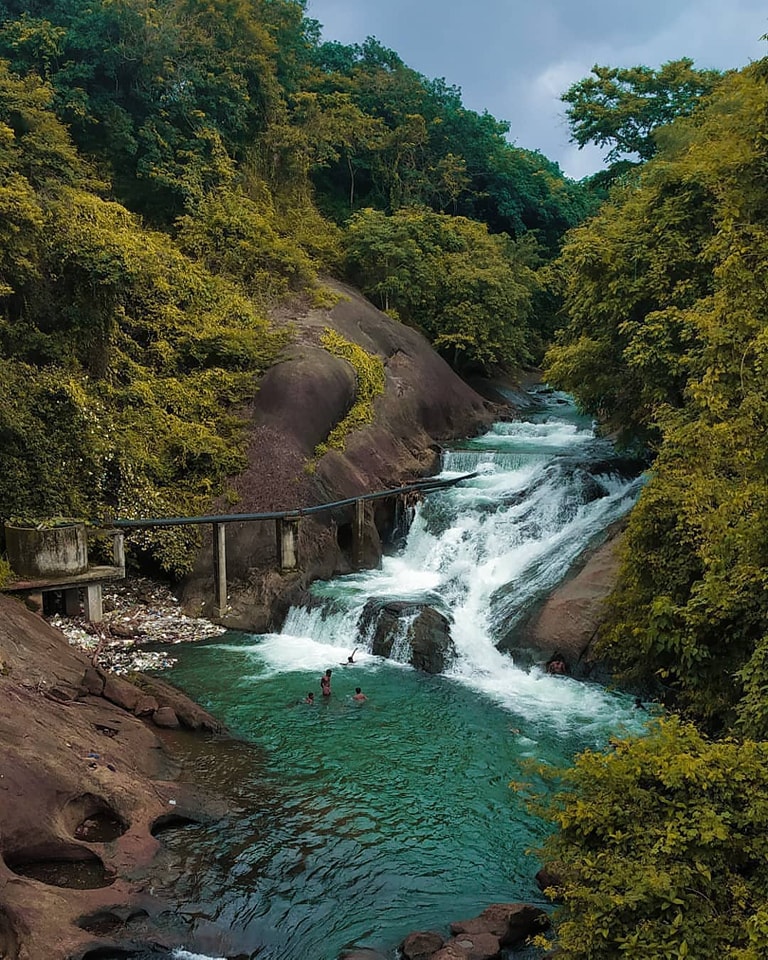
If you look at a map of southern India, you will see a narrow strip of land sandwiched between a massive mountain range and a vast blue ocean. That land is Kerala, the mountains are the Western Ghats, and the ocean is the Arabian Sea. To the casual traveler, these are just beautiful landscapes. But to a scientist or a storyteller, they are part of a breathtaking, invisible cycle of life.
The Western Ghats are not just a row of mountains—they are a living, breathing life-support system that feeds both the land and the sea.
Part 1: The Ultimate Nature Machine
The Western Ghats act like a giant, natural factory. Every summer, heavy winds loaded with moisture blow across the Arabian Sea. The towering peaks of the Ghats stand tall and block these winds, forcing them to rise, cool down, and burst into intense rain. This creates a beautiful, closed-loop network that supports two entirely different ecosystems:
1. The High-Pressure Ocean Injector
Because the mountains are so close to the coast, Kerala’s 41 west-flowing rivers are short and incredibly fast. During the monsoon, they don't wander slowly across flat plains. Instead, they rush down like a high-pressure hose, flushing fresh water, leaves, and rich forest nutrients straight into the Arabian Sea within hours.
This sudden injection of nutrients triggers a massive explosion of marine life. It feeds microscopic plants (phytoplankton), which in turn feed the giant schools of sardines and mackerel that the coastal economy depends on.
2. The Great Mountain Sponge
If all that rainwater just rushed straight into the sea, Kerala would face terrible droughts the rest of the year. Luckily, the highest ridges of the mountains are covered in unique forest patches called Shola forests and grasslands.
These forests act like a colossal sponge. They soak up the fierce monsoon rains, trap the water underground, and then release it slowly, drop by drop, throughout the dry summer months. This keeps Kerala's rivers flowing year-round.
3. The Natural Fertilizer
As the rivers tear down the rocky mountain slopes, they pick up fine silt, minerals, and organic forest mulch. When they reach the lower plains, they deposit this rich mud onto the land. This natural fertilizer is the exact reason why Kerala’s soil is so hyper-fertile, allowing coconut groves, spices, and paddy fields to thrive effortlessly without heavy chemical intervention.
Part 2: Where Nature Meets the Divine
When a landscape determines whether you eat, drink, or survive, human beings don't just study it—they begin to worship it. Over thousands of years, the sheer life-giving power of the Western Ghats transformed them from mere rock and stone into something deeply holy and divine.
                  THE CLOSED-LOOP LIFECYCLE

                       [ ARABIAN SEA ]  ===> (Monsoon Winds) ===>  [ WESTERN GHATS ]
           ▲                                           │
           │                                           │ (Rainfall &
           │ (Nutrients & Fresh Water)                 │  Forest Silt)
           │                                           │
           ▼                                           ▼
           └─────────────────────────◄───────── [ KERALA CORRIDOR ]
The Shield of a God
In local mythology, the very creation of this land is tied to the mountains. Legend says that Sage Parasurama stood on the high peaks of the Western Ghats and threw his divine axe into the sea. The ocean pulled back to where the axe landed, revealing the fertile land of Kerala. Culturally, the mountains have always been viewed as the protective boundary wall of a kingdom claimed directly from the gods.
Forests as Temples
The peaks of the Ghats have always been treated as spaces of spiritual isolation and power. The famous Sabarimala temple sits deep within the dense forests of the mountains. To reach it, pilgrims traditionally walk barefoot through rugged terrain and thick jungles. Here, divinity is directly tied to the wilderness—you cannot worship the deity without respecting and preserving the forest.
Long before big temples were built, ancient communities also protected small pockets of forests called Sacred Groves (*Kavus*). Dedicated to forest spirits and serpent gods, these green zones were protected by strict spiritual taboos. In reality, they kept local freshwater springs clean and safe, beautifully blending spirituality with environmental science.
Conclusion: Living in God’s Own Country
The popular tourism tagline "God’s Own Country" is usually used to describe Kerala’s beauty. But its true meaning is found in this unique ecological balance. The mountains take the wild, chaotic storms of the ocean, soften their blow, filter them through dense forests, and distribute them as clean drinking water and fertile soil to the valleys below.
The Western Ghats are divine because they are the ultimate providers. To protect these mountains is to protect the very soul, culture, and survival of the land itself.