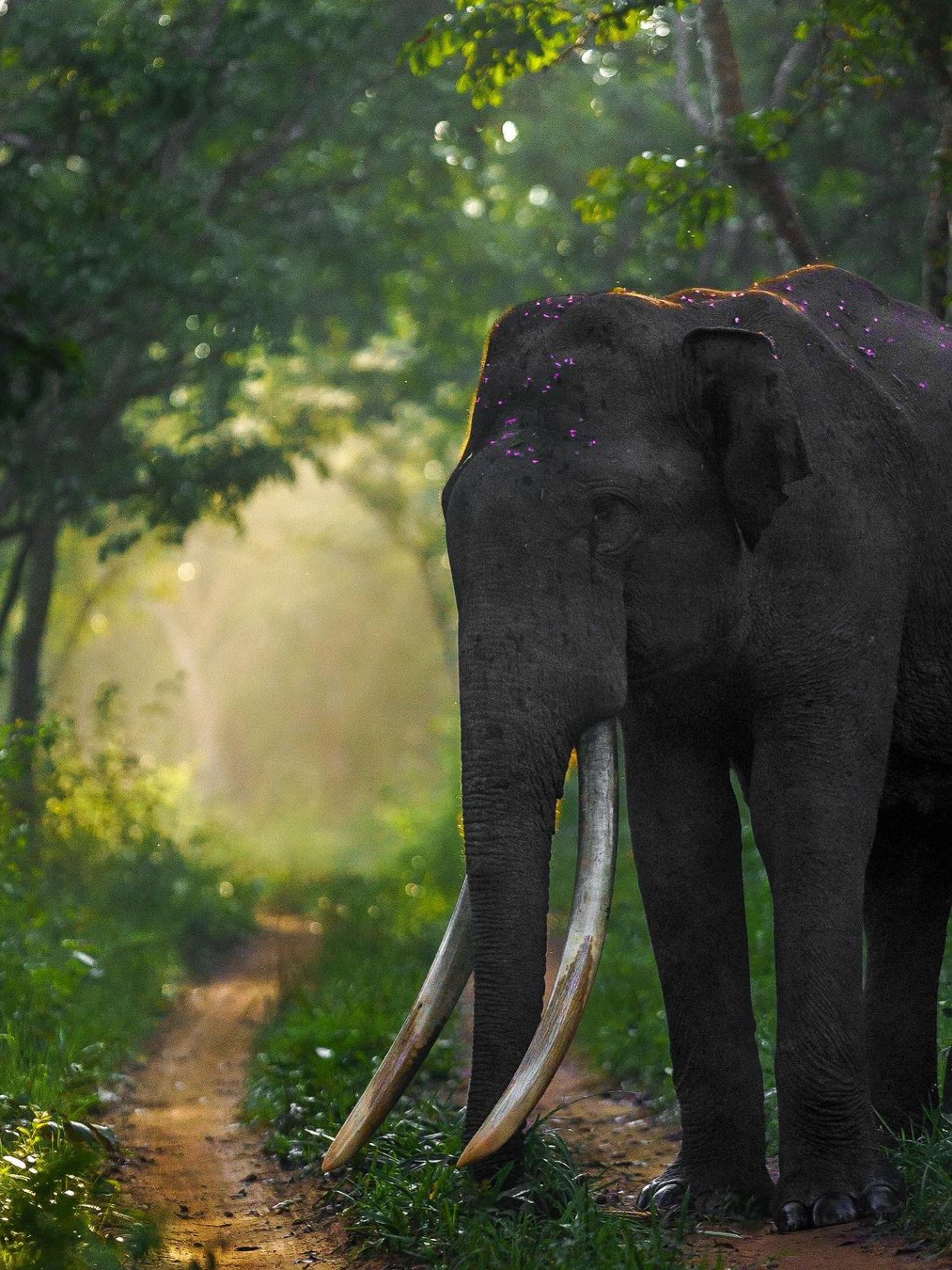
In the quiet, pre-dawn mist of a forest-edge village in Wayanad, Kerala, the sudden snapping of a bamboo stalk is not just a sound—it is a warning. For the families who farm these foothills, the presence of a five-ton Asian elephant in their crop fields is a terrifying reality. It represents not only the potential destruction of an entire year’s harvest of coffee or cardamom, but a serious threat to human life.
For decades, the narrative surrounding human-elephant conflict has been one of mutual fear and tragic retaliation. Incensed by losses, villages have historically turned to electric fencing, trenching, and occasional explosive baits. Elephants, driven by hunger and shrinking migratory corridors, push through anyway. True awareness begins by recognizing that this conflict is not an accident—it is the predictable result of a severely fragmented landscape. To protect both human livelihoods and these magnificent animals, we must look to natural, community-driven solutions.
"The elephant does not want to raid crops. It enters our farms because its ancient migration path has been blocked by a highway, or because invasive lantana has choked out the grass it needs to survive inside the reserve."
The Roots of the Conflict: A Broken Canopy
To solve a problem, we must first understand its biological causes. The Western Ghats host over 25% of the world’s wild Asian elephant population. However, their traditional corridors—the narrow strips of forest that connect different protected sanctuaries—are increasingly sliced by roads, power lines, and private estates.
Furthermore, the massive invasion of exotic weeds like *Lantana camara* has drastically degraded the forest understorey. Elephants, which require up to 150 kilograms of fresh forage every single day, find their natural food sources completely replaced by inedible weeds. Out of sheer necessity, they cross the forest boundaries and enter agricultural zones in search of nourishment. The conflict, therefore, is fundamentally an agricultural food crisis.
Harmony in Biology: Chili and Beehive Fencing
Instead of relying on hostile barriers like high-voltage electric fences that injure migrating elephants, local community programs are utilizing natural, biological deterrents. Chili-infused ropes and suspended beehive fences utilize the elephant's natural biology and fear of bees to redirect them peacefully back to the forest reserve.
Biological Barriers: Chili and Bees
Elephants possess an incredibly sensitive olfactory system. To harness this naturally, farmers are stringing ropes soaked in a thick mixture of crushed hot chilies and spent engine oil along crop borders. The potent, spicy scent acts as an invisible olfactory wall, gently prompting elephants to turn back without any physical confrontation.
In addition, communities are deploying **beehive fences**. Elephants have an instinctive, ancient dread of African and Asian honeybees, which can sting the sensitive tissues inside their trunks. By hanging simple wooden beehives every ten meters along crop borders connected by a wire, an elephant pushing against the wire shakes the hives, releasing the bees.
Not only do the elephants immediately and peacefully retreat, but the beehives generate supplementary honey income for farming families, turning a point of conflict into a sweet livelihood.
Grassroots Community Watch Programs
To keep families safe without resorting to heavy machinery, local Panchayats have mobilized traditional community watches operated by local youths (*Kavalkars*).
- Border Watchtowers: Safe, elevated tree-top watchtowers situated along known elephant entry points allow watchmen to spot approaching herds from a distance using simple rechargeable searchlights.
- Panchayat Phone Trees: Once spotted, watchmen trigger immediate alerts through designated WhatsApp and SMS phone tree groups operated by local Panchayat coordinators, notifying neighboring farms to secure their cattle and stay indoors.
- Empathy-Driven Guarding: Armed with early warnings, watchmen and forest guards use traditional shouting, drum beating, and mild flashlights to guide herds back to the forest buffer zones before they ever reach crop settlements.
A Framework for Coexistence
By combining simple biological deterrents with coordinated community watch systems, villages are taking the surprise—and consequently, the panic—out of elephant encounters. Where these natural systems are maintained, crop raids have dropped significantly, and retaliatory elephant injuries have ceased.
By raising public awareness about why elephants stray and providing communities with the tools to defend their crops safely, we are proving that coexisting with the giants of the Western Ghats is not only possible, but highly beneficial. The ancient pathways of the forest can belong to everyone.