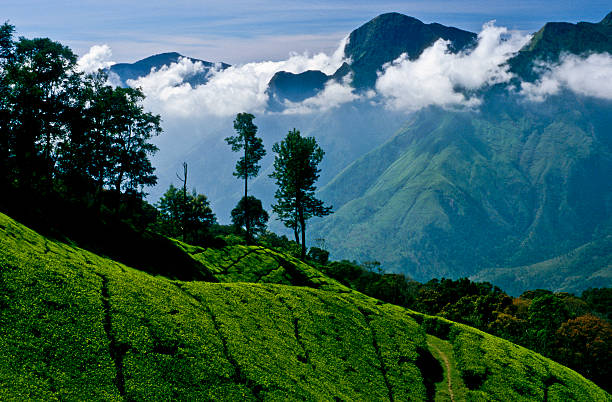
High on the windswept grasslands of Munnar and the Nilgiri hills—where montane winds brush the high-altitude peaks of the Western Ghats—lies a quiet botanical miracle. For eleven years, a modest, woody shrub blends seamlessly into the low-lying shrubs of the montane landscape. But exactly once every twelve years, this plant—the **Neelakurinji** (*Strobilanthes kunthiana*)—undergoes a spectacular, synchronous transformation, bursting into millions of blue-violet bell-shaped blossoms.
This mass blooming, known ecologically as "masting," blankets entire mountain ranges in a shimmering purple haze, attracting tourists, naturalists, and researchers from across the globe. Yet behind this breathtaking visual spectacle lies an evolutionary mystery and a highly fragile reproductive cycle that is increasingly threatened by human footprint, commercial agriculture, and warming temperatures.
"A flower that takes twelve years to prepare its beauty deserves more than a passing tourist's footprint. It demands a decade of silence."
The Evolutionary Science of Masting
In the plant kingdom, synchronous mass flowering is a rare and highly structured survival mechanism. The Neelakurinji is a *plientesial* plant—it lives for precisely twelve years, blooms simultaneously over thousands of hectares, sets millions of seeds, and then completely dies off. The next generation grows entirely from the seeds left behind in the soil, which will require another twelve years to reach maturity.
But why wait twelve years? Botanists identify this strategy as **predator satiation**. By releasing a massive, overwhelming glut of seeds all at once, the plants ensure that local seed-eating birds, insects, and rodents are completely saturated. Even after predators eat their fill, millions of seeds remain untouched, guaranteeing that the next generation has an outstanding survival rate.
This strategy also coordinates pollination. When thousands of flowers bloom simultaneously, it attracts a massive abundance of honeybees and wild pollinators, ensuring highly successful fertilization across the mountain landscape.
Did You Know?
The Neelakurinji is so deeply woven into local geography that it gave the *Nilgiris* (literally meaning "Blue Mountains") their name. The indigenous Toda tribe of the Nilgiris historically calculated their age using the cycles of the Kurinji bloom, equating one bloom cycle to twelve years of life.
Vulnerability: A Soil-Locked Seed Bed
Because the entire future of the Neelakurinji species relies on the seeds left behind after the adult plants die, the topsoil of the high montane grasslands is a vital ecological vault. Unfortunately, this soil is exceptionally thin, rocky, and sensitive.
Several threats jeopardize the dormant seed beds during their twelve-year sleep:
- Invasive Encroachment: Fast-spreading exotic weeds—such as Wattle (*Acacia mearnsii*) and Lantana (*Lantana camara*)—invade the grasslands, choking out light and space and depleting soil moisture before the dormant Kurinji seeds can germinate.
- Encroaching Commercialism: The conversion of high-altitude grasslands into tea estates and tourism infrastructures systematically fragments the contiguous habitats necessary for a healthy, massive masting bloom.
- Climate Volatility: Shifting monsoon timelines and rising temperatures disrupt the cold winter frosts that are believed to trigger the chemical signals required for the plants' twelve-year internal clock.
A Checklist for the Conscious Traveler
During the bloom years, hundreds of thousands of visitors flock to the hills. Without strict conservation awareness, this massive surge in foot traffic causes lasting damage to the fragile seedlings and soil beds. To ensure the Neelakurinji continues to paint the Sahyadri blue for generations, travelers must strictly observe the following ecological guidelines:
| What to Do | Why it Matters | What to Avoid | The Ecological Cost |
|---|---|---|---|
| Stay on designated walking trails | Protects young shoots and shallow soil from compaction | Walking off-trail for selfies | Trampling kills immature Kurinji plants and exposes topsoil to severe monsoon erosion |
| Observe and photograph silently | Preserves the quiet, natural environment for pollinators | Plucking flowers or uprooting plants | Uprooting prevents seeding, permanently deleting that plant's genetic line |
| Carry all trash back to towns | Keeps montane grasslands clean and chemical-free | Littering plastic bottles or wrappers | Decomposing plastics alter soil chemistry and poison native wildlife |
| Support local guides and tribal groups | Empowers community stewardship of the ranges | Buying wild-harvested plants | Creates a market for illegal wild plant extraction, depleting nature |
Preserving the Blue Legacy
The Neelakurinji is a profound reminder that ecological health cannot be measured only in days or seasons. It demands an appreciation for long-term cycles—for a biological clock that beats once a decade.
Protecting the montane grasslands of the Western Ghats is not just about keeping a landscape beautiful for tourism; it is about honoring the long, quiet periods of preparation that nature requires. By conserving the shallow soil, keeping out invasive weeds, and treading softly during the bloom, we ensure that every twelve years, the mountains will rise to welcome the blue-purple sea once more.