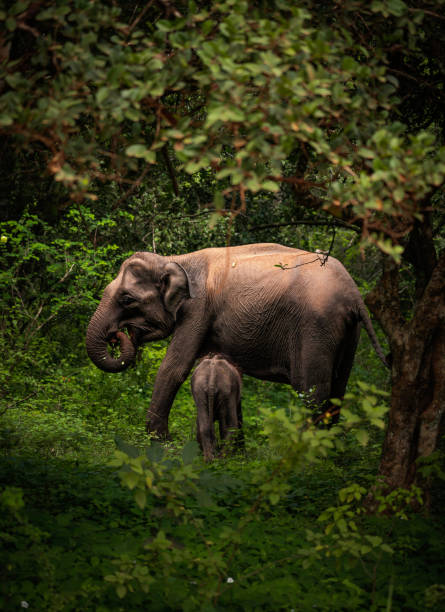
In the emerald fringe of Kerala's Wayanad district, the boundary between forest and farm is a fragile, contested line. As ancient migration corridors become increasingly fragmented, wild elephant herds frequently wander into agricultural lands, driven by the sweet scent of ripening sugarcane, banana, and paddy crops. For decades, this overlap has yielded tragic clashes, resulting in crop destruction, ruined livelihoods, and the loss of both human and elephant lives.
Traditional deterrents—such as deep trenches, high-voltage electric fences, and loud firecrackers—have often proved ineffective, costly to maintain, or hazardous to the animals themselves. Elephants are highly intelligent creatures; they quickly learn to push non-lethal electric wires with logs or fill trenches with soil. To resolve this conflict, conservationists and local tribal groups have turned to a remarkable biological solution that leverages the elephants' own evolutionary biology: the humble honeybee.
"We used to fear the elephants, and they feared us. Now, the bees speak a language of boundaries we both understand."
The Science: Why Giant Pachyderms Fear Tiny Bees
It seems paradoxical that a six-ton animal with hide up to an inch thick would be terrified of a tiny insect. However, the evolutionary biology of the Asian elephant (*Elephas maximus*) reveals why this fear is deeply hardwired. Elephants possess incredibly sensitive skin patches around their eyes, behind their ears, and inside their highly vascularized trunks. A bee sting inside the trunk is exceptionally painful and can impair their crucial sense of smell and breathing.
Consequently, elephants have developed a profound acoustic aversion to the buzzing sound of native honeybees (*Apis cerana indica*). Scientific studies have confirmed that when elephants hear the specific pitch of angry bees, they emit a unique, low-frequency infrared rumble that warns the rest of the herd to retreat, fleeing the area within minutes.
Did You Know?
An elephant's warning rumble in response to bees is so specific that even playing audio recordings of bees will sometimes cause a herd to alter its path. However, using live beehive fences is far more effective as it prevents the elephants from habituating to the sound.
How the Beehive Fence Works
The beehive fence is an elegant, low-tech bio-engineering system. Simple, locally crafted wooden beehives are suspended at ten-meter intervals along farm boundaries, hanging from post structures. The hives are connected to one another by a strong, continuous steel wire.
When an elephant approaches the field at night and attempts to push past the posts, its body collides with the wire. The tension on the wire instantly shakes the swinging beehives on either side. Disturbed by the motion, the bees emerge in a swarm. Hearing the immediate buzz and sensing the presence of the hive, the elephants turn away, leaving the crops completely untouched.
| Deterrent Method | Ecological Impact | Approximate Cost | Primary Disadvantage | Community Livelihood Benefit |
|---|---|---|---|---|
| Electric Fences | Dangerous (Risk of accidental electrocution) | High (Requires constant power & maintenance) | Easily breached by clever herds using logs | None |
| Deep Trenches | Erosion risk, fragments small animal movement | Very High (Heavy machinery required) | Silt up during monsoon, bypassed easily | None |
| Beehive Fences | Positive (Boosts local pollination & biodiversity) | Low (Local wood and wires) | Requires regular apiculture care | High (Produces organic "Elephant Honey") |
A Sweet Dividend: Pollination and Honey Income
What makes the beehive fence model exceptionally sustainable is that it is not merely a defensive shield; it is an active economic generator for forest-fringe communities. Indigenous farmers and local women's cooperatives are trained in basic apiculture. They maintain the hives, monitor the health of the colonies, and harvest the organic wild honey.
Marketed as "Elephant Honey," this high-quality product is sold at a premium to eco-tourists and urban markets, providing families with a steady stream of secondary income during the non-harvest seasons. Furthermore, the presence of thousands of active bees has significantly boosted the pollination rates of nearby coffee and vegetable crops, improving agricultural yields by up to 20 percent.
By transforming a volatile ecological clash into a mutually beneficial partnership, the beehive fences of Wayanad show that true conservation does not require expensive technology or steel walls. Sometimes, the most resilient paths to coexistence are written in the quiet, buzzing language of nature itself.